
Decoding the Technical Data Sheet: What Installers Actually Need to Look For
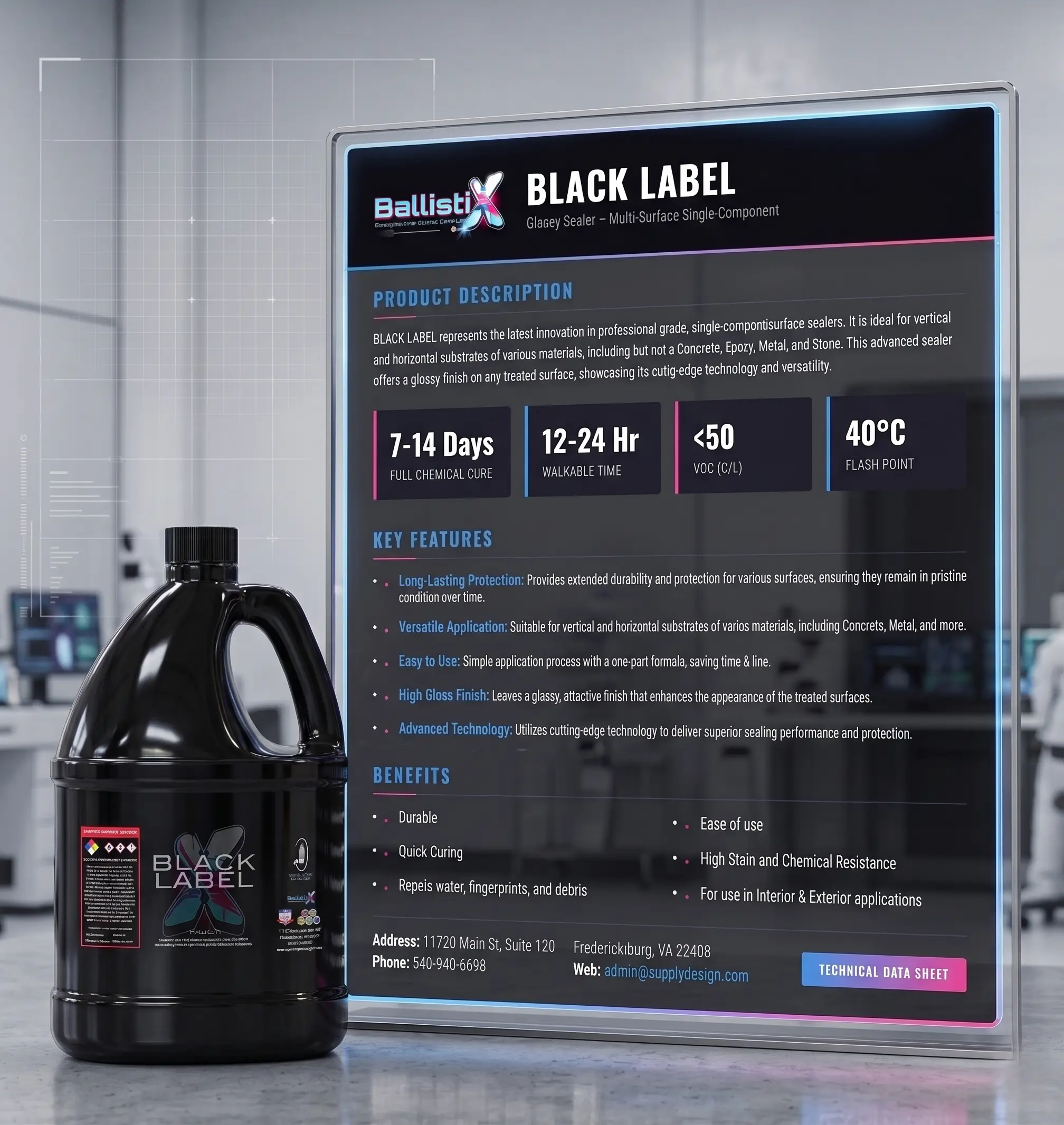
We have all been there. You are on the job site, the clock is ticking, the substrate is finally prepped, and the last thing you want to do is scroll through a dense, multi-page PDF on your phone. It is tempting to just mix parts A and B and get to work.
But treating the Technical Data Sheet (TDS) as an optional suggestion is one of the fastest ways to guarantee a floor failure. A TDS is not marketing material; it is the exact chemical playbook for how a product behaves in the real world. Misunderstanding it leads to bubbling, delamination, premature wear, and the dreaded callback.
Here is a straightforward breakdown of the most critical sections of a TDS and what you actually need to be looking for before you crack open a bucket.
1. Mixing Instructions and Induction (Sweat) Times
Not all coatings are a simple "pour and mix." Advanced chemical systems often require highly specific sequencing.
- Exothermic Reactions: Many high-performance coatings rely on specific temperature milestones during the mixing phase.
- Sweat-In Times: Some multi-part systems need to rest after mixing to allow the chemical reaction to stabilize before application.
2. Pot Life vs. Working Time
These two terms are often confused, but they mean very different things out on the floor.
- Pot Life: This is the amount of time the mixed product can sit in the bucket before it catalyzes and becomes unusable.
- Working Time: This is how long you have to apply, roll, and back-roll the material once it is poured onto the floor.
The Reality Check: Pouring the material out of the bucket and onto the floor usually extends your working time, as the mass is spread out and the exothermic heat can dissipate. Always check the TDS for both metrics based on your current room temperature.
3. Application Thickness and Coverage Yield
More is not always better. Applying a coating too thick can lead to solvent entrapment, cloudiness, or a soft cure. Applying it too thin compromises durability.
- Mil Thickness: The TDS will specify the exact wet film thickness required. For premium topcoats, this can be incredibly thin; for instance, a wet film thickness of just 1-1.5 mils.
- Substrate Porosity: Your coverage rate will drastically change depending on what you are coating. A single gallon might yield up to 1,000 square feet on a completely non-porous surface, but drop as low as 400 square feet on a highly porous substrate.
4. Environmental Constraints (Temperature and Humidity)
Resinous coatings are highly sensitive to their environment during the curing phase. The TDS provides the absolute boundaries for a successful installation.
- Dew Point Avoidance: Applying a topcoat too close to the dew point introduces microscopic moisture to the surface, causing blushing or amine sweating (a sticky, cloudy film).
- Temperature Minimums: Applying below the recommended temperature slows down the chemical cross-linking, leaving the floor vulnerable to traffic or chemical exposure far longer than the stated cure time.
5. Performance Metrics (ASTM Data)
The back page of the TDS usually looks like an algebra textbook, filled with ASTM (American Society for Testing and Materials) numbers. This is the hard proof of the product's durability.
- Coefficient of Friction (COF): This is your slip resistance. It dictates how safe the floor is to walk on. A rating of 0.79 for both wet and dry conditions indicates excellent grip and safety.
- Abrasion Resistance: Usually measured by the Taber Abrasion test. It tells you exactly how much material is lost when subjected to heavy wear. Lower milligram loss means a tougher floor.
The Bottom Line
Taking five minutes to decode the Technical Data Sheet separates the professionals from the amateurs. It removes the guesswork from the installation, protects your profit margins by eliminating easily avoidable mistakes, and ensures the floor you pour performs exactly as promised. Master the chemistry on paper, and the floor will take care of itself.